
Does Homeowners Insurance Cover Sewer Backups and Sump Pump Failures?
By Emery & Webb Insurance · Reviewed by our licensed agents · Updated October 23, 2026
Does homeowners insurance cover sewer backups or sump pump failures? Learn when water damage is covered, when it isn't, and how water backup coverage can help.
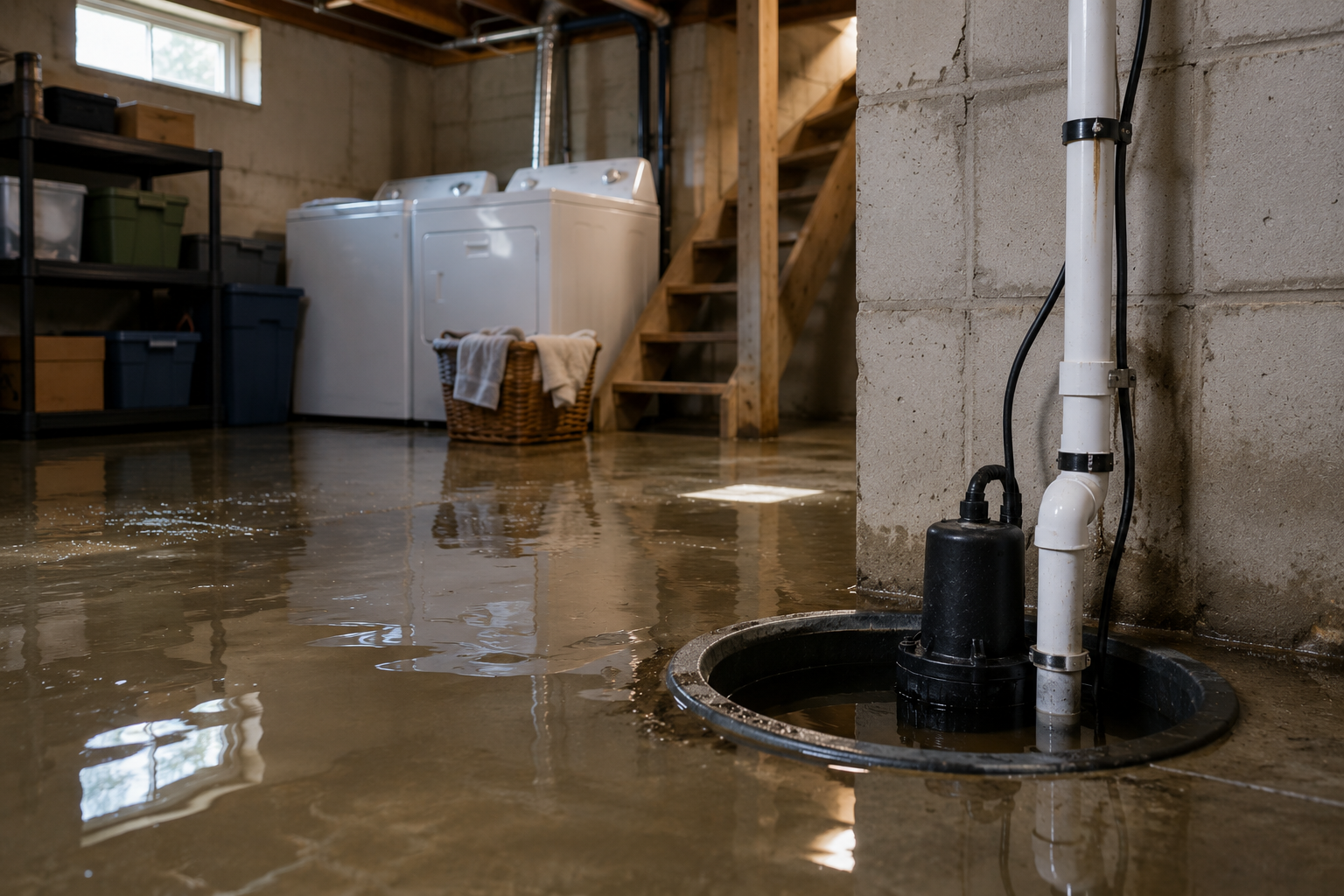
A sewer backup or failed sump pump can turn a finished basement into a costly mess in a matter of minutes. Water can damage flooring, drywall, furniture, appliances, and personal belongings—and cleanup may involve more than simply removing the water.
Many homeowners assume their homeowners insurance will cover the damage. Unfortunately, that isn't always the case.
Standard homeowners insurance typically does not automatically cover water or sewage that backs up through a sewer, drain, or sump pump. However, homeowners can often add water backup coverage to their policy for additional protection.
Understanding this distinction before you have a problem can prevent an unpleasant—and potentially expensive—surprise.
Does Homeowners Insurance Cover Sewer Backup Damage?
Generally, a standard homeowners insurance policy does not cover damage caused when water or sewage backs up into your home through a sewer or drain.
For example, imagine a municipal sewer line becomes overwhelmed during a severe rainstorm and sewage backs up through a basement drain. If the resulting damage falls under a sewer or drain backup exclusion, your standard homeowners coverage may not pay for the cleanup or repairs.
That's important because a sewer backup can damage:
- Finished basement flooring
- Drywall and insulation
- Furniture
- Electronics
- Appliances
- Stored personal belongings
Professional water removal, cleaning, sanitizing, and mold remediation can add considerably to the cost.
Does Homeowners Insurance Cover Sump Pump Failure?
A sump pump is designed to remove water that collects around or beneath your home's foundation. If the pump stops working and water enters your basement, a standard homeowners policy may exclude the resulting damage.
A sump pump can stop working because of a power outage, mechanical problem, clogged discharge line, overwhelmed system, or other issue.
The important question isn't simply why the sump pump stopped working. You also need to know whether your homeowners policy includes coverage for the resulting water backup or overflow.
What Is Water Backup Coverage?
Homeowners can often purchase an optional endorsement commonly referred to as water backup coverage, sewer backup insurance, or sump pump overflow coverage. The exact name and terms vary among insurance companies.
This additional coverage may help pay for covered damage resulting from water or sewage that backs up through a sewer or drain or overflows from a sump pump.
Depending on the policy, coverage may help with expenses such as water removal, professional cleaning, damaged flooring and walls, and replacement of covered personal property.
Coverage limits, deductibles, exclusions, and eligibility vary, making it important to review the specific endorsement rather than assuming all water backup coverage is the same.
Water Backup Insurance Is Not the Same as Flood Insurance
This is one of the most important distinctions homeowners should understand.
Water backup coverage and flood insurance address different risks.
Suppose heavy rain causes a nearby creek to overflow and surface water enters your basement through a window or foundation opening. That may be considered flooding rather than a sewer backup.
Standard homeowners insurance generally excludes flooding, and water backup coverage isn't a substitute for a separate flood insurance policy.
On the other hand, if water backs up through a drain or sump system, water backup coverage may apply depending on the circumstances and policy language.
The source of the water can therefore make an enormous difference when determining whether a loss is covered.
What If a Pipe Bursts in My Basement?
A burst plumbing pipe introduces another important distinction.
Homeowners insurance commonly provides coverage for sudden and accidental water damage originating from plumbing inside the home, subject to policy terms and exclusions.
For example, if a pipe suddenly bursts and damages your basement ceiling and flooring, your homeowners insurance may cover the resulting damage.
That is different from groundwater entering through the foundation, surface flooding, or water backing up through a sewer or drain.
This is one reason "water damage" isn't a single insurance category. Where the water came from and how it entered your home matter.
How Much Water Backup Coverage Do You Need?
The appropriate amount depends heavily on your home.
Consider what you have below ground level. A basement containing only a furnace and storage boxes presents a very different financial exposure from a fully finished basement containing a family room, home office, bathroom, laundry room, electronics, furniture, and other belongings.
When reviewing your coverage, consider the potential cost of:
- Water and sewage removal
- Professional cleaning and sanitizing
- Drywall and insulation replacement
- Flooring replacement
- Furniture and personal property
- Electrical repairs
- Appliance damage
- Mold remediation when covered
- Rebuilding a finished basement
Your insurance advisor can help you evaluate available limits and determine what makes sense for your home.
How Can You Reduce the Risk of a Sewer Backup or Sump Pump Failure?
Insurance is an important part of protecting your finances, but prevention matters too.
Homeowners with sump pumps should test them periodically and keep the sump pit and discharge system maintained. A battery backup or secondary pump can provide additional protection during power outages or primary pump failures.
You should also pay attention to slow drains, unusual plumbing sounds, recurring backups, or other warning signs that could indicate a developing sewer or drainage problem.
If your home has experienced previous water problems, discussing them with both a qualified plumbing professional and your insurance advisor can help identify potential vulnerabilities.
Don't Wait Until There's Water in the Basement
A common mistake homeowners make is assuming that if water damages their house, their homeowners insurance will automatically cover it.
That's simply not how every policy works.
Sewer backups, sump pump overflows, burst pipes, and flooding can all produce what looks like the same result—a wet basement—but they can be treated very differently by an insurance policy.
At Emery & Webb Insurance, we can help you understand what your homeowners insurance covers, identify potential gaps, and determine whether additional water backup or other coverage may be appropriate for your home.
Reviewing your coverage now is much easier than discovering a gap while standing in a flooded basement.